Knowledge
What is IT/OT integration?
IT/OT integration connects a company’s IT systems — ERP, MES, cloud — with the operational technology on the shop floor: machines, controllers, sensors. The aim is to make production data available in real time. Without it, the data stays where it arises.
What for
The basis for everything that comes after
Analytics, process optimisation, quality assurance, predictive maintenance, artificial intelligence in manufacturing — every one of these needs the same thing: production data that is available. Starting them without having connected IT and OT means starting at step two.
Not only for large groups
The task is the same in a mid-sized company, often more pressing: fewer people for transferring things by hand, the same expectation of traceability and meeting dates.
The five stumbling blocks
What such projects fail on — and what helps against it
It is almost always the same five. None of them is surprising, but any one of them is enough to bring a project to a halt.
Silos between two departments
IT is measured on being current, flexible and secure; operational technology on stability, availability and long running times. These are not sensitivities but opposing targets. What helps: a graphical interface where both sides build the same data flow, without either having to program.
Technology from several decades
A controller from 1998 stands next to a cloud application from yesterday. What helps: over 50 ready-made connectors — OPC UA, Siemens, Beckhoff, SAP, SQL, MQTT, REST — so that the age of a machine does not force a special solution.
Security risk from a direct connection
Many controllers know neither authentication nor encryption. What helps: encrypted communication outward — MQTT over TLS, HTTPS — placement in DMZ or zero-trust structures, and above all no direct contact between machine and IT system, but a controlled handover through a secure way station.
Availability against flexibility
Standstill in production is the most expensive quantity there is, and OT often has to run for years without interruption. What helps: a service that works in the background on site or in a container, light on resources, whose updates run without interrupting operation.
Raw data that no IT system will accept
What comes out of OT is often unprocessed, unstructured or full of gaps; IT systems expect structure. What helps: rules, triggers and functions that reshape the data on the way instead of passing it on unfiltered.
The core
Do not wire, mediate
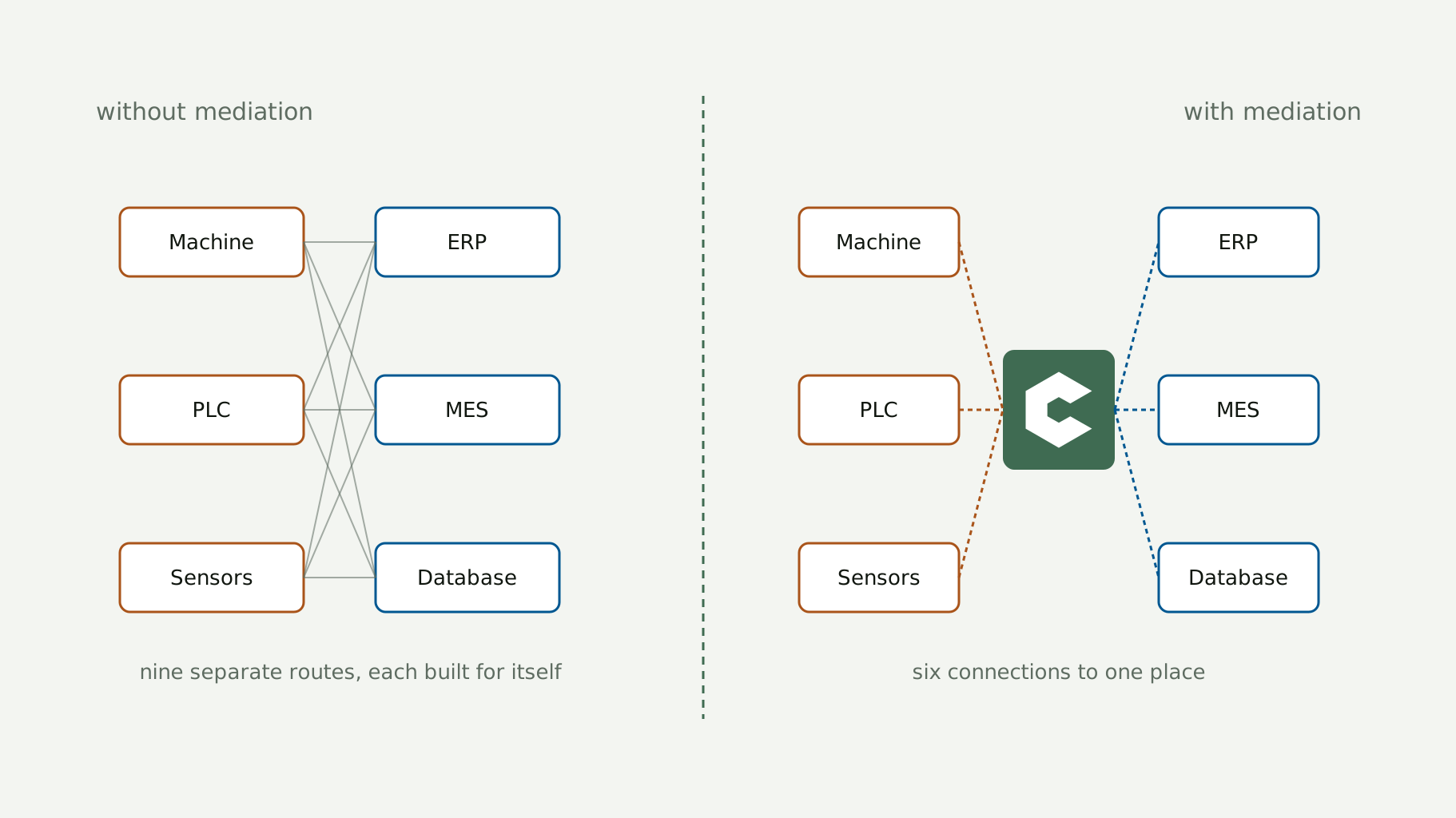
Three of the five stumbling blocks have the same cause: the two worlds are coupled directly and each then has to carry the other’s rules. So connubes stands between them as a way station — machine and IT system do not talk to each other, each talks to connubes.
| IT side | OT side |
|---|---|
| ERP, MES, cloud services | Machines, PLCs, sensors |
| Databases, BI tools | Scales, scanners, printers |
| expects structured data | delivers raw values at the machine’s own rate |
| changes continuously | should ideally never change |
Why this is not only a security measure but an architectural principle is under separation of concerns.
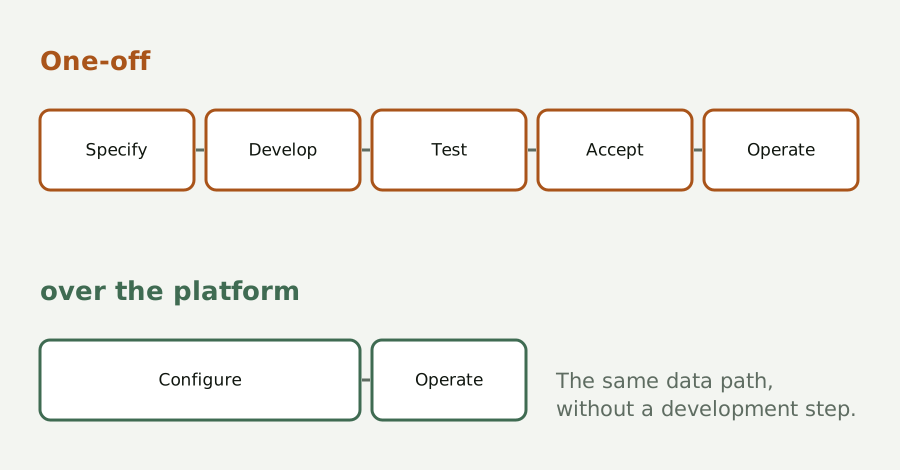
The effort moves from development into configuration — and so from weeks to hours.
Common questions
Answered briefly
What exactly does IT/OT integration mean?
It connects IT systems such as ERP, MES and cloud with OT systems such as machines, controllers and sensors, in order to make production data usable in real time.
What happens if you do not tackle it?
The data stays isolated in production. That removes the basis for the smart factory, predictive maintenance and any form of AI in manufacturing.
What are the biggest stumbling blocks?
Cultural silos between IT and OT, different interfaces, cybersecurity risks, production’s availability requirements, and unstructured data from the machine.
Is this relevant for smaller companies too?
Yes. The task arises whatever the size of the company — it depends on how many systems do not talk to each other today.