Enterprise
When one installation becomes an architecture
connubes connects one line, one plant, one system landscape. Once that grows into a group of several plants, countries and dozens of instances, a question comes with it that a middleware alone does not answer: who keeps the overview? That is what pronubes is for — the enterprise solution from the same house.
The moment
How you notice the moment has come
It is not the number of connections that decides, but whether anyone still knows which ones exist. Four signs come up again and again.
How they relate
connubes stays — pronubes comes on top
pronubes does not replace connubes. The data paths you built keep running as before; connubes can be connected to pronubes, where it becomes one of many nodes in a shared architecture.
The difference is the level. connubes answers: how does this data get from here to there? pronubes answers: how many such paths are there, what are they called, who owns them, and are they running right now?
No rebuild, no cut-over date
The four building blocks of pronubes can be introduced one at a time. The usual way in is visibility: first see what is running — before anything is changed.
The platform
Four building blocks, each on its own
They complement each other but do not depend on each other. Which comes first is decided by your most pressing question — usually the one about the overview.
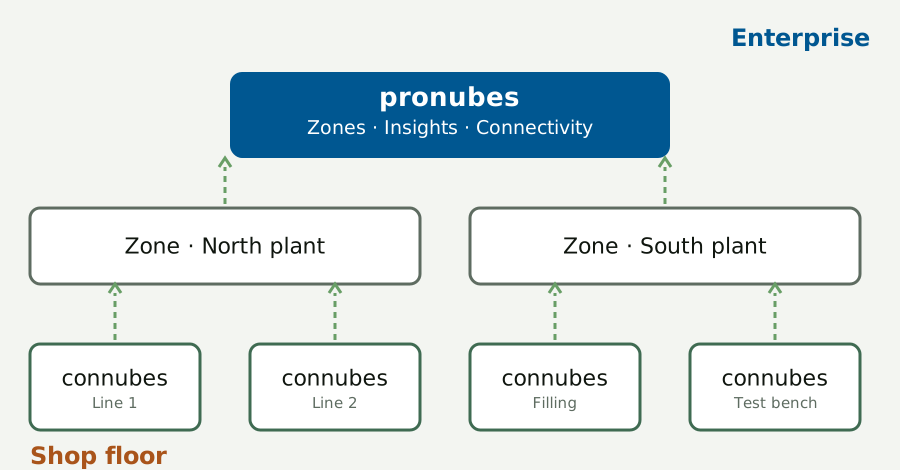
The same data paths, one level up: grouped, named and visible while they run.
Edge — process where the data arises
Instances right at the machine, with low latency and high availability on site. With the matching interfaces, more than 100 different systems can be connected.
Connectivity — one shared language
One central connector layer instead of a point-to-point integration per connection. OPC UA, MQTT, REST and SQL run uniformly, whatever the manufacturer, age or protocol.
Zones — your structure, freely defined
Group systems by your own criteria: geographically by site, technically by system component, or hierarchically by ISA-95 and Unified Namespace.
Insights — transparency while it runs
The status of every edge instance and every connection, data flows you can follow, faults visible early. Diagnosis instead of guesswork.
In operation
What changes for the people in charge
For IT: one place for the status of every connection, instead of a list of machines someone has to go and check. For OT: a fault is a finding, not a guess — you can see whether the system is reachable or the data has stopped.
And for both: a new line is placed into an existing structure rather than triggering a round of clarification. That is exactly the difference between many installations and one architecture.
Common questions
Answered briefly
Do we have to replace connubes?
No. pronubes is the level above, not the successor. Existing data paths keep running unchanged; connubes can be connected to pronubes.
From what size does it pay off?
Less a question of size than of spread. A single, manageable installation needs no second level. Once several instances run in several places and nobody knows their state by heart, the point is reached.
Do all four building blocks have to come at once?
No, they can be introduced independently. The usual way in is Insights: first see what is running.
What about the order we have grown into?
Zones map it rather than replace it — geographically, technically or hierarchically by ISA-95 and Unified Namespace. You decide the structure, not the software.
Is pronubes from the same house?
Yes. pronubes is a product of inray Industriesoftware GmbH, like connubes — one contact, one support team, the same origin.