What are edge and edge computing?
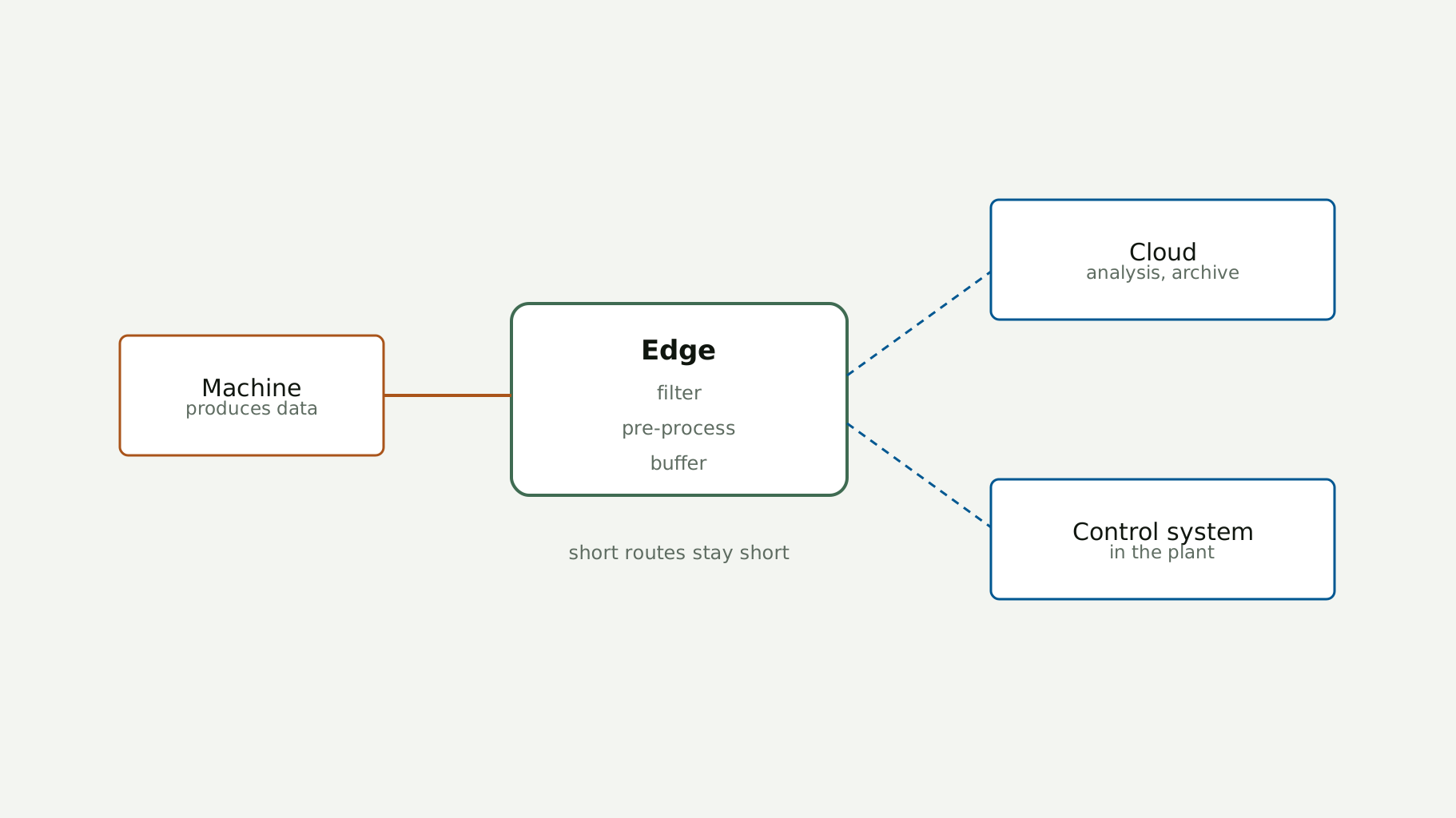
Edge means processing data where it arises — at the edge of the network, at the machine, instead of in a distant data centre. That lowers latency and bandwidth needs and keeps the response inside the plant. What goes upward is then no longer every reading, but the result.
Definition: edge and edge computing
Edge refers to data arising and being processed close to where it comes from — the edge of the network, where local networks meet larger ones. Edge computing moves processing and analysis exactly there, instead of doing it centrally in data centres or in the cloud.
The approach has grown in importance in recent years because two demands have grown: real-time processing and low latency.
How edge computing works
Instead of sending every reading to a distant data centre, processing and analysis run locally, close to the source — at the sensor, at the controller, on a device in the cabinet. Because the data travels no great distance, latency falls and reactions to events become immediate.
The processed information then travels on as needed — to central servers or other systems, where wider analysis and archiving happen. That way upward is usually handled by a middleware.
What edge devices speak
| Protocol | Kind | What it is good for at the edge |
|---|---|---|
| MQTT | Message-oriented, publish/subscribe | Light on resources and therefore suited to devices with little power. Devices publish to a topic, interested receivers listen in. |
| REST | An architectural style over HTTP | Widespread in web applications and cloud services; edge devices can hand over and fetch data through the familiar HTTP methods. |
Where it pays off
The benefit is not limited to manufacturing. In industrial automation, edge computing optimises processes and reduces unplanned downtime; in the automotive industry it contributes to the safety of autonomous vehicles; in IoT it makes the processing of device data efficient; in healthcare it allows monitoring in real time; in retail, analysis of customer behaviour; in oil and gas it raises efficiency at remote sites.
What they share: wherever an answer has to be there quickly and the line to the outside is narrow, expensive or unreliable.
Edge or a central server structure
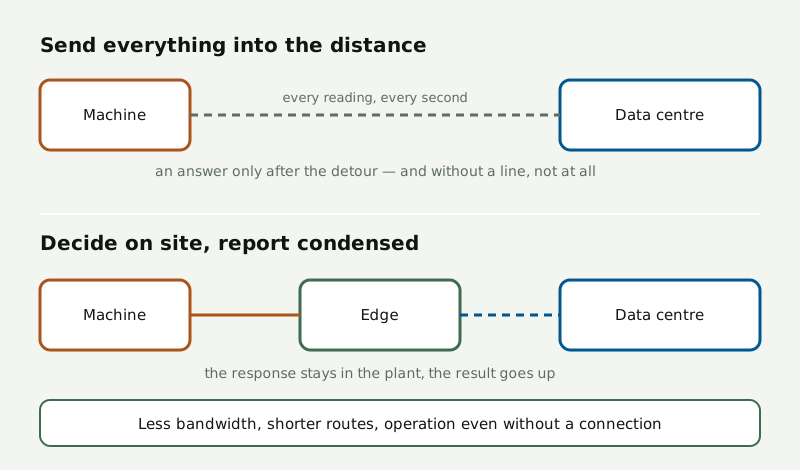
Above, every reading takes the long way. Below, the response stays in the plant and only the result goes up.
In the conventional server structure, processing runs in central data centres or cloud servers — often far from the sources. With edge computing it happens close to where the data arises. Three differences follow that count in operation: very low latency, less data on the network, and a structure that is easier to extend without touching the central resources.
Edge does not replace the centre. Analysis across sites, archiving and model building still belong there. The question is not “edge or cloud” but which decision has to be made where — and which data has to make the journey at all.
What edge means for security
- Less transmission. What is processed locally need not travel over insecure networks — that lowers the risk on the way.
- Faster response. Low latency also helps in spotting and fending off incidents.
- A network under less load. Local processing saves bandwidth and guards against overload.
- Separated zones. Edge devices can be run as self-contained security zones; an attacker does not get from there into the whole network without further ado.
- Redundancy. If one device fails, another can take over the job.
Doing it with connubes
connubes runs platform-independently — on Windows, in Docker or in Kubernetes — and therefore on a device in the plant, not only in the data centre. The connections are the same as everywhere: at the machine over OPC UA or directly at the controller, upward over MQTT, REST or into the database.
Terms in brief
- Latency
- The time between event and response. It grows with every stretch of network the data crosses.
- Edge device
- A device at the edge of the network that takes in, processes and passes on data.
- Container
- An encapsulated runtime environment, for instance with Docker. It makes it possible to run the same application in the same way on different devices.
- Fog computing
- A layer between edge and cloud; it bundles several edge devices before things go further up.
Common questions
What is edge computing?
Moving data processing and analysis to the place where the data arises, instead of to a central data centre or the cloud.
What is the advantage?
Lower latency, less load on the network, and a structure that can be extended without touching the central resources. The response stays where it is needed.
So do I no longer need a cloud?
You do. Analysis across sites, archiving and model building still belong at the centre. Edge only decides what happens on site and what is sent up at all.
Is edge more secure?
In several respects yes: less data in transit, separated security zones, faster reaction to incidents, and the option of running devices redundantly.
Does connubes run at the edge?
Yes — platform-independently on Windows, in Docker or in Kubernetes, and so on a device in the plant as well.